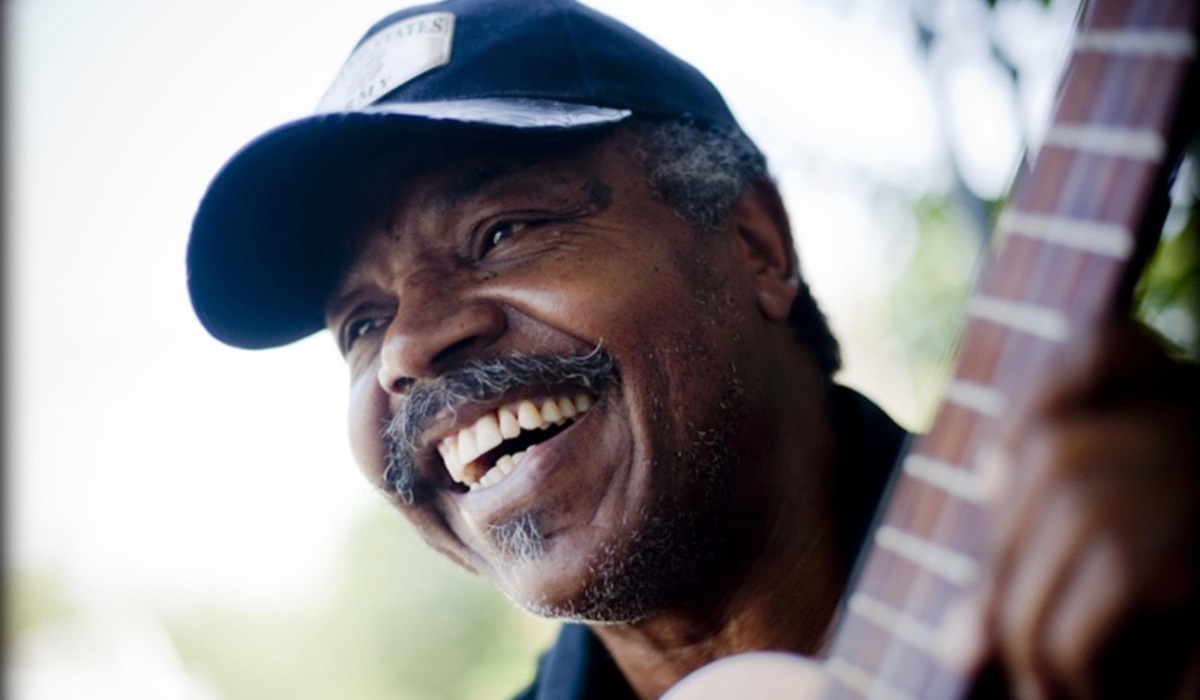
Terry Huff
Terry Eugene Huff (16 October 1947 – 14 December 2012; Washington D.C.), better known as Terry Huff, was an American soul and R&B vocalist, songwriter, and producer.
He came to prominence as the emotive, falsetto lead singer of the Washington, D.C.-based soul group Special Delivery, scoring a permanent place in soul music history with his mid-1970s balladry. Possessing a striking multi-octave vocal range, Huff deftly bridged the gap between raw street-corner harmonies and the sophisticated production of the quiet storm radio era.
Early Life
Born in North Carolina, Huff was raised primarily in Maryland foster homes before relocating to Washington D.C. in 1959. His childhood musical foundations were formed in the church, where he began singing at an early age before transitioning to school talent shows at Eastern High School.
Alongside his brothers, Andrew and Jimmy, Huff spent his youth harmonising on the street corners and porches of 15th Street and Independence Avenue SE. Influenced heavily by the energetic sounds of Little Richard and the vocal blends of the Everly Brothers, the siblings eventually organised their own vocal group, Andy and the Marglows. The family act achieved modest local recognition and went on to release early singles like "Just One Look" under Liberty Records before internal tensions prompted a split. Following his initial musical pursuits,
Huff completed his education and embarked on a radically different career path, joining the Metropolitan Police Department. Displaying a sharp aptitude for detective work, he became one of the youngest detectives in the history of the force at age 24, famously tracking heroin pushers and apprehending a notorious bank robber known to local media as the "Gentleman Bandit".
Career
The pull of the music industry ultimately led Huff to resign from the police force in 1974 to rejoin his brothers and pursue recording full-time. He joined forces with the soul outfit Act 1, who had previously recorded for Spring Records.
After moving the collective to Mainstream Records, the lineup re-formed around Huff's piercing falsetto and changed their name to Special Delivery. In 1975, the group auditioned for famed producer Van McCoy with an agonisingly raw, self-penned ballad titled "I Destroyed Your Love". Split across two parts on a 7" vinyl single, the track entered the Billboard R&B charts in October 1975 and peaked at number 62, establishing itself as a definitive classic on quiet storm radio stations. Despite the single's growing popularity, internal friction over songwriting credits and business differences led to Huff parting ways with the original group members just weeks prior to its full commercial push. To support the mounting success of the record, Mainstream Records assembled a revolving backing group to tour with Huff under the name Terry Huff and Special Delivery.
This configuration recorded the 1976 landmark studio album The Lonely One. Co-produced by Huff alongside Al Johnson of The Unifics, the project featured vocal contributions from Huff's brothers Andy and Jimmy, yielding the substantial East Coast hit title track "The Lonely One", as well as well-received singles like "Where There's A Will (There's A Way)" and "That's When It Hurts". Though the original lineup of Special Delivery eventually reclaimed their name for later independent albums like Living On the Run (1981), Huff transitioned to an independent solo career, later cutting rare soul tracks like "Come On Around" for Circle City Records in 1982.
Personal Life
Beyond his public musical contributions, Huff experienced significant personal turmoil that drastically redirected his later life. In 1983, he abruptly abandoned his independent music career in Los Angeles and returned to Washington, D.C. after a family tragedy in which his brother Lonnie was fatally shot, and his brother Andrew was severely wounded. The incident sparked a profound shift in Huff, driving him to spend years independently studying the systemic roots of urban violence, poverty, and economic inequality. In his later years, Huff faced severe personal hardship, battling dependency, resource insecurity, and prolonged periods of homelessness within the D.C. shelter system.
Despite his circumstances, he remained a highly visible community figure, actively designing an incremental financial compensation theory aimed at helping disenfranchised citizens escape poverty. Huff was diagnosed with advanced health complications later in life, and following a lengthy, resilient battle with colon cancer, he passed away on 14 December 2012 at a hospice in Clinton, Maryland, at the age of 65. He was survived by his daughter, Tiffany, and a grandson, with community leaders Peter Bug and John Sharpe organising public fundraising events to support his final memorial arrangements.
Current Activities
Decades after his brief window in the mainstream spotlight, Huff's vintage catalogue has enjoyed a substantial global resurgence via digital streaming platforms. Archival restorations of The Lonely One have introduced his sweet falsetto and sophisticated arrangements to new generations of crate-diggers, northern soul enthusiasts, and hip-hop producers. These digital reissues ensure that his foundational influence on the 1970s Washington, D.C. music tapestry remains firmly preserved and celebrated internationally.
http://bit.ly/2OpNJqN