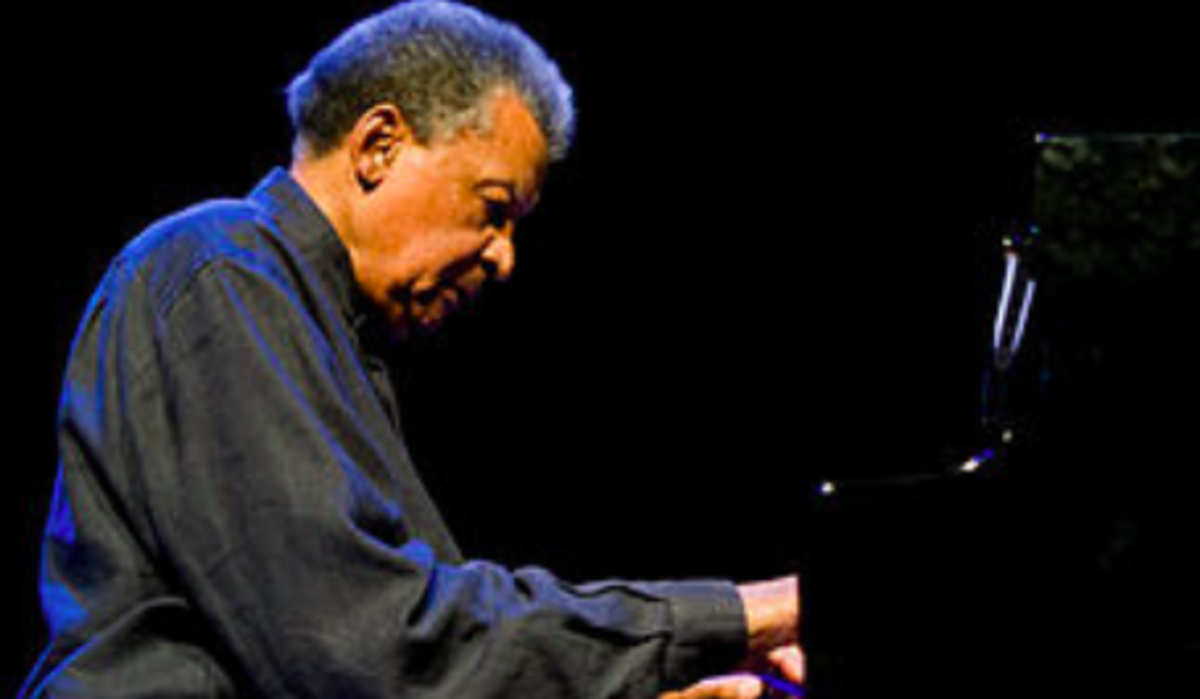
Dollar Brand (Abdullah Ibrahim)
Abdullah Ibrahim (9 October 1934 – 15 June 2026; Cape Town) was a South African pianist, composer, and educator, formerly known as Dollar Brand. A defining figure in the genre of Cape jazz, Ibrahim’s career spanned over seven decades, during which he seamlessly fused the traditional rhythms of South African marabi and kwela with the improvisational structures of American jazz and the classical technicality of Duke Ellington and Thelonious Monk.
Revered as "South Africa’s Mozart" by Nelson Mandela, he was a pivotal cultural voice in the anti-apartheid movement, with his music serving as a spiritual anchor for resistance and liberation. His specialisation lay in his ability to convey profound emotional depth through understated, meditative piano compositions that reflected the diverse cultural tapestry of his homeland.
Early Life
Born Adolph Johannes Brand in the famed District Six of Cape Town, Ibrahim was exposed to a rich melting pot of cultural influences from a young age. His mother and grandmother were both pianists and singers in the local African Methodist Episcopal church, where he first absorbed the spiritual hymns and gospel music that would later permeate his work.
He began taking piano lessons at the age of seven and quickly developed a voracious appetite for music, earning the nickname "Dollar" from American sailors because he was frequently seen buying jazz records from them for a dollar. By his teenage years, he was already performing professionally with local groups such as the Tuxedo Slickers, navigating the vibrant but segregated music scene of Cape Town.
Career
Ibrahim’s professional breakthrough came in 1959 when he co-founded the Jazz Epistles alongside trumpeter Hugh Masekela and saxophonist Kippie Moeketsi. The group recorded Jazz Epistle Verse 1, the first jazz album by a Black South African ensemble, before the deepening restrictions of apartheid forced the band members into exile. In 1962, Ibrahim moved to Zurich, Switzerland, where he was discovered by Duke Ellington, who produced his debut European album, Duke Ellington Presents the Dollar Brand Trio (1963).
His most significant composition, "Mannenberg" (1974), became an unofficial anthem of the struggle against apartheid. Following his return to South Africa in the 1990s, he was celebrated as a national treasure, performing at Nelson Mandela’s inauguration in 1994.
His contributions were formally recognised in 2009 when he received the Order of Ikhamanga (Silver) for his excellence in the arts and the fight against racism, alongside an Honorary Doctorate of Music from the University of the Witwatersrand.
Personal Life
In 1965, Ibrahim married the acclaimed jazz vocalist Sathima Bea Benjamin, with whom he shared a creative and personal partnership until her death in 2013. The couple had two children: a son, Tsakwe, and a daughter, Tsidi, who is better known as the hip-hop artist Jean Grae.
A deeply spiritual man, he converted to Islam in 1968, changing his name from Dollar Brand to Abdullah Ibrahim, a decision that profoundly influenced the meditative and disciplined nature of his later compositions.
He was also a dedicated martial artist, holding a black belt in karate and practicing the discipline for over 60 years, famously being one of the few musicians permitted to perform in a Japanese Shinto shrine.
Current Activities
Ibrahim remained active as a performer and composer well into his nineties, earning global accolades that cemented his status as a jazz legend. In 2019, he was named an NEA Jazz Master, the highest honour in American jazz, and in 2020, the Emperor of Japan conferred upon him the Order of the Rising Sun for his lifetime achievement in emancipating people through music.
His final creative period was marked by reflective releases such as The Balance (2019) and Solotude (2022), while his last album, 3 (2024), captured live performances from London’s Barbican Centre. He continued to tour until months before his death, with his final public performance at the Cape Town International Jazz Festival in March 2026.
Abdullah Ibrahim passed away on 15 June 2026 in Germany, leaving a legacy documented in recent reissues and digital anthologies.
https://en.wikipedia.org/wiki/Abdullah_Ibrahim