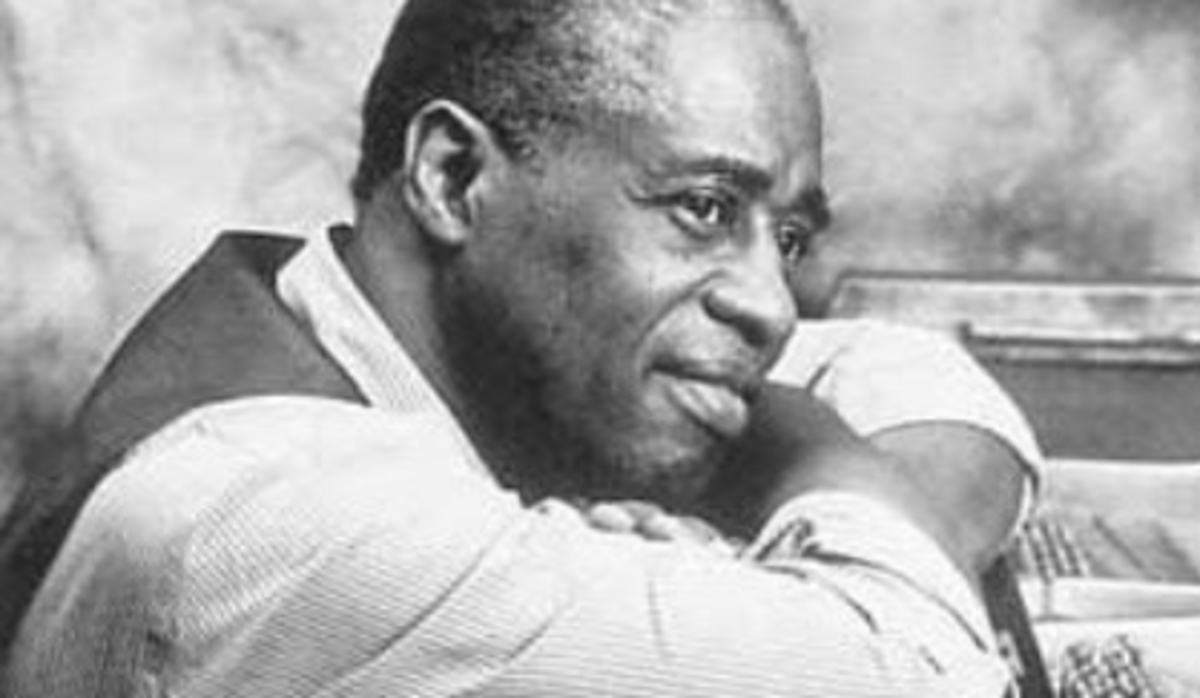
Norman Simmons
Sarney Norman Simmons (6 October 1929 – 13 May 2021; Chicago, Illinois) was an American pianist, arranger, composer, and educator widely revered as one of the most empathetic and skilled accompanists in jazz history.
Known for his ability to "breathe" with a vocalist, he elevated the role of the accompanist to an art form, serving as the trusted musical anchor for legends such as Helen Humes, Carmen McRae, Sarah Vaughan, Anita O'Day, and Joe Williams.
Beyond his reputation as a supporting musician, Simmons was a sophisticated arranger whose work bridged the gap between hard bop and soul-jazz, and a dedicated educator who shaped future generations of jazz talent.
Early Life
Born and raised in Chicago, Illinois, Simmons was immersed in the city's vibrant musical ecosystem from a young age. He attended the Chicago School of Music and was deeply influenced by the piano stylings of Duke Ellington and Hank Jones. His professional foundation was solidified during the early 1950s when he served as the house pianist at the Beehive Lounge on East 55th Street. This residency proved to be a critical training ground, as he led the rhythm section for visiting jazz titans, including Wardell Gray and Lester Young.
Most notably, Simmons backed Charlie Parker during the saxophonist's final Chicago engagement in February 1955, a historic residency that cemented Simmons' status within the jazz community before he eventually relocated to New York City at the urging of singer Ernestine Anderson.
Career
Simmons’ career flourished in the 1960s as he became a first-call arranger and pianist. His mainstream commercial breakthrough occurred in 1966 when his arrangement of the spiritual "Wade in the Water" for the Ramsey Lewis Trio became a massive crossover hit, defining the soul-jazz sound of the era.
Despite this commercial success, his most enduring legacy lay in his collaborations with jazz vocal royalty. He worked extensively with Carmen McRae in the 1960s, served as Joe Williams' pianist and musical director from 1979 until the singer's death in 1999, and provided essential support for Anita O'Day, Sarah Vaughan, and Helen Humes throughout the 1970s and 1980s.
During this same period, he entered an independent era, establishing his own publishing entity, Milljac, and releasing albums such as Ramira The Dancer (1976) and Midnight Creeper (1979). In 2002, he joined the Duke Ellington Legacy Band, performing alongside Ellington’s grandson to preserve the orchestral tradition that had originally inspired him.
Personal Life
Simmons resided for many years in Lakewood, New Jersey, before moving to Mesa, Arizona, later in life. He was a passionate advocate for jazz education, serving on the faculty of William Paterson University, The New School, and the Jazzmobile program in Harlem, where he mentored countless aspiring musicians. According to obituaries published at the time, he left no known immediate survivors, having dedicated his life almost exclusively to his craft and his students.
His philosophy on music and life was often intertwined, with peers describing him as a "Zen-like" figure who brought a profound sense of calm and structure to every bandstand he occupied.
He died on 13 May 2021 in Mesa at the age of 91 due to complications from multiple myeloma.
Current Activities
His discography, including his late-career standout album In Private (2004) and his earlier Milljac releases, has seen renewed interest on digital streaming platforms, allowing new listeners to explore his sophisticated trio work alongside his celebrated vocal accompaniments.
His influence remains active in jazz academia, where his methods of accompaniment are still referenced by vocal coaches and piano instructors.
https://en.wikipedia.org/wiki/Norman_Simmons_(musician)