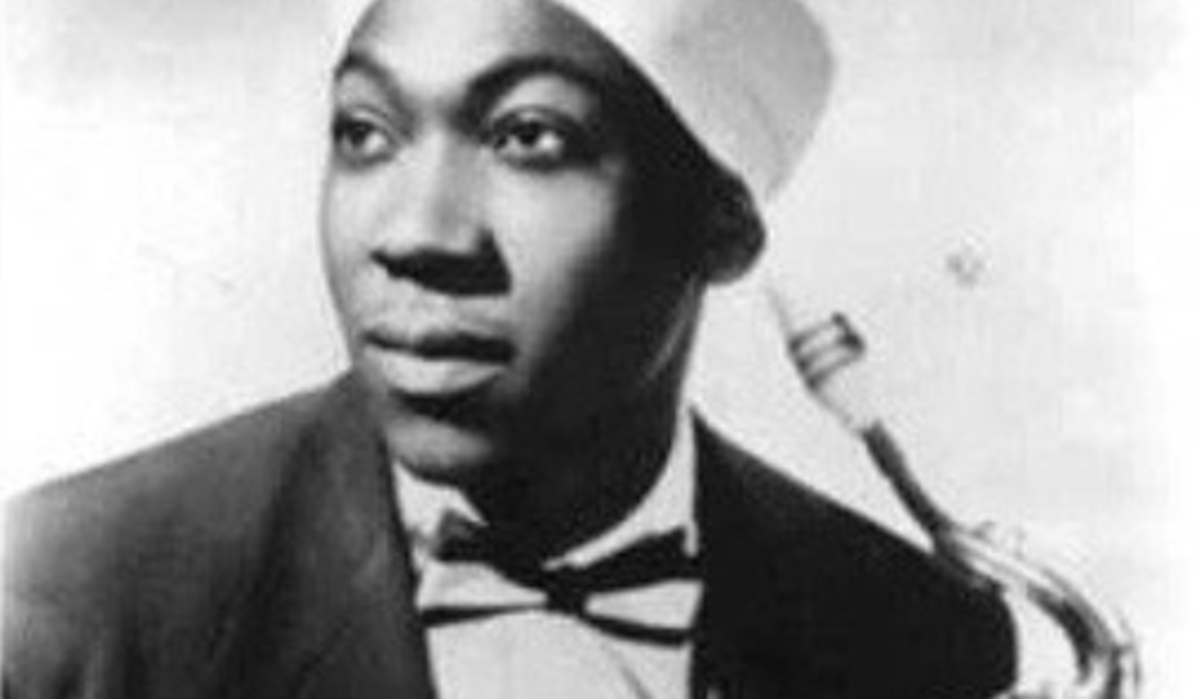
Lynn Hope
Lynn Hope (26 September 1926 – 24 February 1993; Birmingham, Alabama), also known as El Hajj Abdullah Rasheed Ahmad, was an American jazz and blues tenor saxophonist. He achieved widespread recognition during the 1950s for his distinctive instrumental remakes of pre-rock pop standards, paired with high-energy rhythm and blues tracks. As an influential figure in the post-war music scene, he became celebrated for bridging the gap between traditional jazz melodies and the energetic showmanship that anticipated the rise of rock and roll.
Early Life
Born and raised in Birmingham, Alabama, Hope developed his initial musical skills under the guidance of Fess Whatley, a legendary teacher and bandleader known locally as the "Maker of Musicians". Whatley's disciplined instruction provided a foundation for Hope and numerous other jazz artists of the era. Upon graduating from high school in the 1940s, Hope joined the popular big band led by trumpeter King Kolax, relocating to Chicago, Illinois, where he honed his style. After departing from Kolax's ensemble, he chose to remain in Chicago and eventually organised his own musical group, which featured his sister and brothers.
Career
Hope's independent recording career began in earnest in 1950 when he initially signed with Miracle Records, though the contract was quickly deemed invalid. He subsequently moved to Premium Records, where he recorded a soulful instrumental version of "Tenderly". The track was later picked up and distributed by Chess Records, becoming his definitive commercial success by reaching number eight on the Billboard R&B chart and number 19 on the pop music chart. Between 1951 and 1957, Hope recorded extensively for Aladdin Records, creating popular reworkings of established anthems like "September Song," "Summertime," and "Blue Moon".
While his primary singles maintained straightforward, recognisable melodies, the B-sides featured fierce, uptempo jump blues tunes such as "Blow Lynn Blow" and "Hop, Skip and Jump," which showcased his reputation as one of the wild saxophone "screamers" who performed at venues like Chicago's Ebony Club. He concluded his active recording career with a final series of sessions for King Records in 1960 before retiring from the commercial music center.
Personal Life
Beyond his musical contributions, Hope was a deeply spiritual individual who converted to Islam, adopting the name El Hajj Abdullah Rasheed Ahmad. He became one of the most prominent African American Muslims of the 1950s, famously wearing a traditional turban or fez during his public performances. A devout follower of the faith, he affiliated with the Adenu Allahe Universal Arabic Association and acted as a leader and teacher for a Sunni Muslim community in Philadelphia, where he taught classes on the Arabic language and the Koran.
He made history by completing the Hajj pilgrimage to Mecca twice, including a notable 1952 journey where he was recognised as one of the few Americans to do so, and he later embarked on a tour of Egypt and the Middle East in February 1957.
His domestic life and religious devotion were famously highlighted in a 1953 feature in Ebony magazine, which documented him leading prayers, reading with his family, and relaxing at home. Hope eventually settled in New Jersey, where he lived quietly until his death in Collingswood on 24 February 1993.
Current Activities
Following his passing in 1993, Hope's musical and cultural legacy continues to be celebrated by historians and collectors of early American rhythm and blues. His historic role as a pioneer of both rock-infused saxophone showmanship and the early integration of Islamic identity into American jazz is preserved through specialised institutions like America's Islamic Heritage Museum.
Modern digital reissues and archival compilations frequently reintroduce his dynamic B-sides and smooth pop interpretations to new generations of audiophiles. His unique life story remains a subject of ongoing study in academic discussions exploring the intersection of mid-century African American music, spiritual transformation, and social expression.
https://en.wikipedia.org/wiki/Lynn_Hope