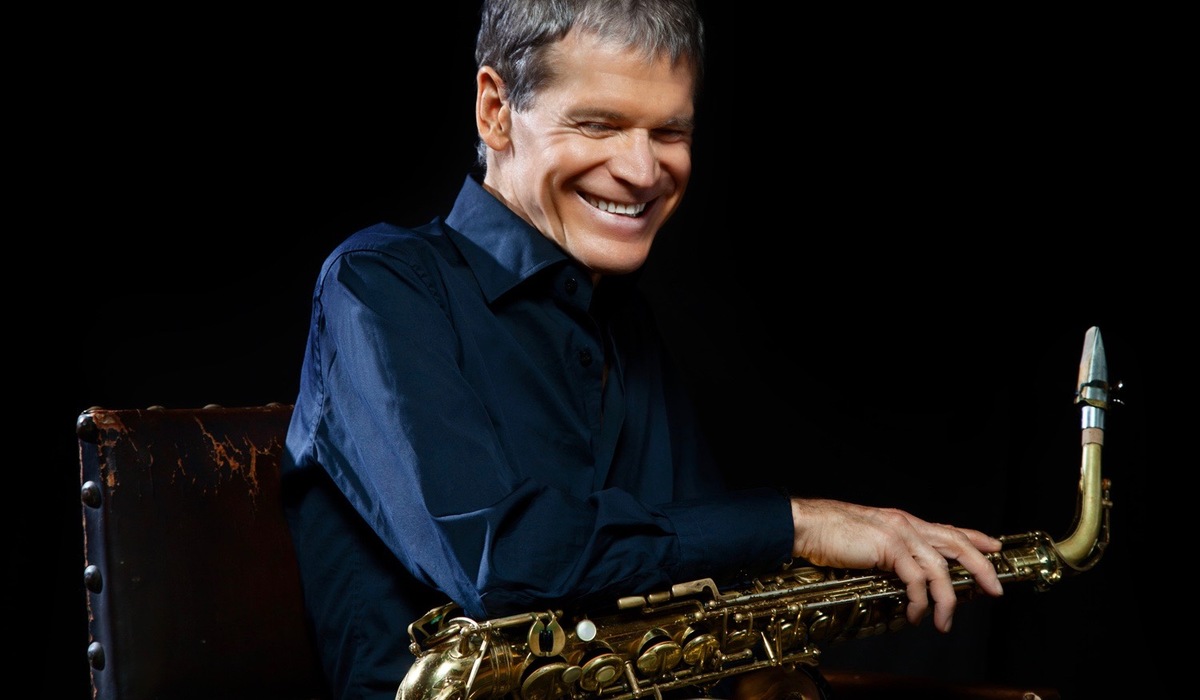
David Sanborn
David William Sanborn (July 30, 1945 – May 12, 2024; Tampa, Florida) was an American alto saxophonist, celebrated as one of the defining voices of contemporary jazz, R&B, and pop saxophone over a career spanning nearly six decades.
Early Life
Sanborn was born in Tampa, Florida, and spent his childhood in Kirkwood, Missouri. At age three, he contracted polio, which affected his lungs, an arm, and a leg, and left him confined to an iron lung for a year. On his doctor's advice that a wind instrument might help strengthen his lungs, he began taking saxophone lessons at eleven, a therapeutic beginning that grew into a lifelong calling.
He drew early inspiration from Hank Crawford, the former music director for Ray Charles, whose tone Sanborn would later make distinctly his own. By his mid-teens, he was already performing alongside blues greats Albert King and Little Milton. He went on to study music at Northwestern University before transferring to the University of Iowa, where he studied with saxophonist J.R. Monterose.
Career
Sanborn's professional career began in earnest when he joined the Paul Butterfield Blues Band, with whom he performed at the Woodstock festival in 1969. Through the 1970s and beyond, he became one of the most in-demand session saxophonists in popular music, recording with an extraordinary range of R&B, soul, and jazz artists including Stevie Wonder, contributing to "Tuesday Heartbreak" on the album Talking Book, James Taylor, on "How Sweet It Is (To Be Loved By You)," Aretha Franklin, James Brown, George Benson, Chaka Khan, Al Jarreau, Dr. John, David Bowie, and Luther Vandross, alongside further collaborations with the Rolling Stones, Paul Simon, Elton John, Bruce Springsteen, Steely Dan, Eric Clapton, and Sting, among many others.
His saxophone solo on Bowie's 1975 hit "Young Americans" became one of his most recognised recorded contributions, and he also toured with Bowie, appearing on the live album David Live, on which he additionally played flute. He launched his solo career with the album Taking Off in 1975, followed by Hideaway (1979) and Voyeur (1981), the latter earning him his first Grammy Award, for Best R&B Instrumental Performance, for "All I Need Is You"; both albums sold half a million copies.
Central to his sound from the late 1970s onward was his close working and personal relationship with bassist, composer, and producer Marcus Miller, whom Sanborn met through New York's session and Saturday Night Live band circles; the two went on to collaborate across some fifteen Sanborn albums between 1980 and 1999, with Miller writing many of Sanborn's best-known compositions, including "Run for Cover" and the title track of Straight to the Heart, and producing landmark records such as Straight to the Heart (1986 Grammy winner), As We Speak, and Upfront. Sanborn later described their creative partnership as "shorthand," reflecting decades of shared musical history.
Over more than two dozen solo albums, nine went gold or platinum, and Sanborn won six Grammy Awards in total, including four in consecutive years during the mid-to-late 1980s. His melodic, blues-inflected style became a defining sound of the format later known as smooth jazz, a label he himself was never fully comfortable with. In 1997, he joined Miller, Eric Clapton, Joe Sample, and Steve Gadd in the touring supergroup Legends, and from 2011 he toured extensively with Miller and keyboardist George Duke as the trio DMS, a group formed after the three, who had crossed paths since the late 1970s through projects including Sanborn's television show Night Music, performed together on the Smooth Jazz Cruise and decided to take the collaboration on the road.
In 2013, Sanborn reunited with pianist Bob James for the acoustic jazz album Quartette Humaine, followed by Time and the River (2015), produced by Miller. He continued to perform and record prolifically into the 2010s and 2020s, maintaining an active touring schedule even after being diagnosed with prostate cancer in 2018.
Personal Life
Sanborn was widely credited within the music industry with, in the words of one tribute, "putting the saxophone back into rock 'n' roll," reflecting his rare ability to move fluidly between jazz, pop, R&B, and rock settings across a six-decade career. His childhood recovery from polio, and the saxophone's role in that recovery, remained a defining part of his personal story throughout his life.
He died on May 12, 2024, in Tarrytown, New York, at the age of 78, due to complications from an extended battle with prostate cancer, which he had managed since his 2018 diagnosis while maintaining a regular touring schedule, with concerts already scheduled into 2025 at the time of his death.
On November 25, 2024, a David Sanborn Tribute Concert was held at Sony Hall in New York City, hosted by longtime collaborator Marcus Miller alongside broadcaster Pat Prescott, and live-streamed by jazz radio station WBGO. The concert featured performances by Eric Marienthal, Bob James, Paul Shaffer, Will Lee, Kurt Elling, Randy Brecker, Alex Han, and Dave Koz.
https://en.wikipedia.org/wiki/David_Sanborn