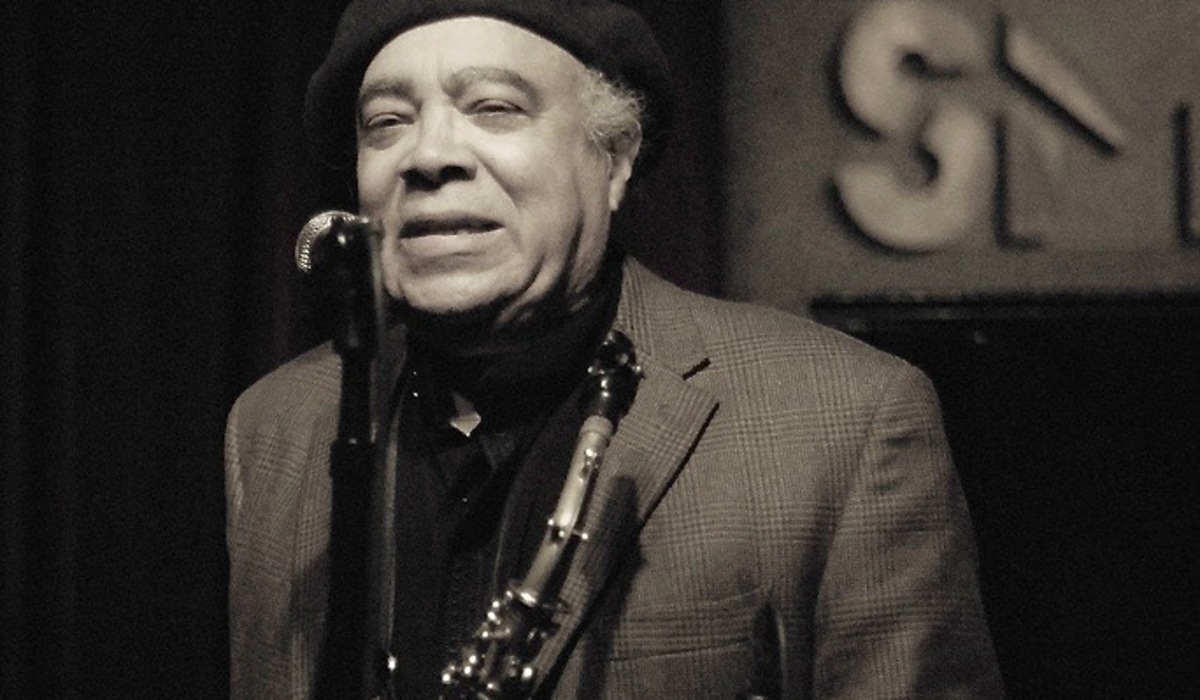
James Spaulding
James Ralph Spaulding Jr. (born July 30, 1937, in Indianapolis, Indiana) is an American jazz saxophonist and flautist, celebrated as one of Blue Note Records' most in-demand sidemen during the 1960s.
Early Life
Spaulding was born into a musical family in Indianapolis, Indiana; his father, a professional guitarist, led his own big band and taught him to read music. He began playing bugle in grade school before taking up trumpet and saxophone on his own, and studied clarinet while attending Crispus Attucks High School.
This early grounding in music theory and sight-reading, instilled by his father, proved decisive in his professional development, giving him the versatility to work in virtually any band with written arrangements.
Career
Following high school, Spaulding served in the U.S. Army before relocating to Chicago in 1957, where he studied at the Cosmopolitan School of Music on the GI Bill. There, his reading ability caught the attention of bandleader Sun Ra, who invited him to join his Arkestra; Spaulding toured and recorded with the group between 1957 and 1961.
He briefly returned to Indianapolis before relocating to New York City in 1962 or 1963, where he began working with pianist Randy Weston and drummer Max Roach. His association with fellow Indianapolis native, trumpeter Freddie Hubbard, brought him his greatest recognition, as he became a member of Hubbard's quintet in the mid-1960s and appeared on several of Hubbard's Blue Note and Atlantic recordings.
Through the 1960s, Spaulding became one of Blue Note's busiest session musicians, recording as a sideman with Art Blakey, Grant Green, Duke Pearson, Wayne Shorter, Joe Henderson, McCoy Tyner, Bobby Hutcherson, Hank Mobley, Larry Young, Sonny Rollins, Stanley Turrentine, Horace Silver, and Lee Morgan, among many others. He remained active through the 1970s and beyond, working with Charles Tolliver, David Murray, including on Murray's octet recording Hope Scope, and Duke Ellington's big band under the direction of Mercer Ellington, and held a brief tenure with the World Saxophone Quartet.
He made his recording debut as a leader in 1976 with the Duke Ellington tribute James Spaulding Plays the Legacy of Duke, released on Storyville, and went on to record further leader dates for the Muse, HighNote, and his own Speetones labels, including Brilliant Corners (1988), Gotstabe' A Better Way (1990), Songs of Courage (1992), Blues Nexus (1994), and the live recording Blues Up & Over: Live (2001), the latter featuring saxophonist Dan Faulk, pianist Isaac Ben Ayala, bassist Eric Lemon, and drummer Reggie Nicholson.
He performed at the Saxophone Summit Harlem Celebration on July 30, 2001, marking the opening of former President Bill Clinton's Harlem office, and served as a judge for the Thelonious Monk International Jazz Saxophone Competition in February 2002. Over a career spanning more than five decades, he has performed at venues and festivals internationally, including the Montpellier and Saalfelden jazz festivals in France and Austria.
Personal Life
In 2019, Spaulding published his autobiography, Learning the Score: A Jazz Memoir, reflecting on his path from Indianapolis's Indiana Avenue jazz clubs to his collaborations with Sun Ra and Freddie Hubbard. In July 2024, Indianapolis public radio station WFYI marked his 87th birthday with a three-part radio series, Echoes of Indiana Avenue, drawing on archival recordings and interviews to explore his role within the city's mid-20th-century Black jazz scene. Despite his extensive discography and influence on a generation of saxophonists blending bop, hard bop, and avant-garde playing, Spaulding has often been described by critics as underrated relative to his contribution to the music.
Spaulding has continued to give interviews reflecting on his career in recent years.
https://en.wikipedia.org/wiki/James_Spaulding