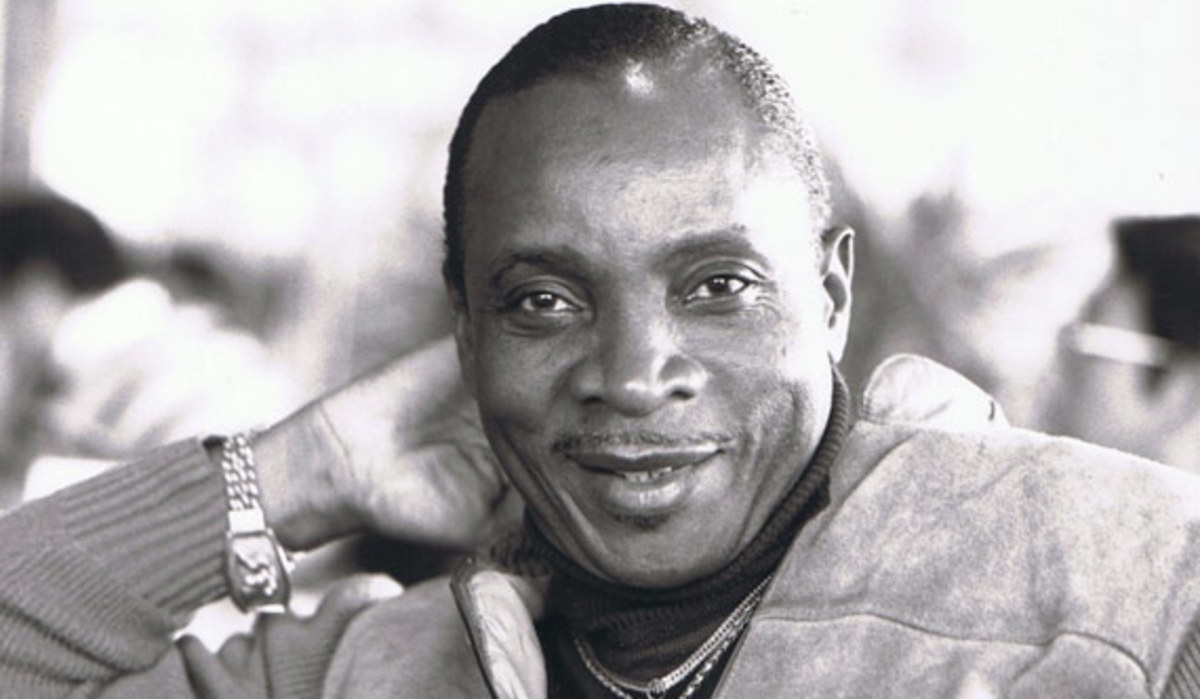
Mighty Sparrow
Slinger Francisco (9 July 1935 – 27 September 2026; Grand Roy, Grenada), better known as Mighty Sparrow, was a legendary Trinidadian calypso singer, songwriter, and guitarist. Universally celebrated as the "Calypso King of the World", he stands as one of the best-known, most influential, and commercially successful calypsonians in the history of music.
Francisco completely transformed the genre, securing Trinidad's Carnival Road March competition eight times, winning the Calypso King/Monarch title eight times, and twice emerging victorious in the elite Calypso King of Kings competition.
His signature performance style combined sharp political commentary, observational humour, and an unmatched stage presence that helped export the vibrant musical heritage of Trinidad and Tobago to international audiences.
Early Life
Born in the rural fishing village of Grand Roy in Grenada, British West Indies, Francisco migrated to the Colony of Trinidad and Tobago as a one-year-old with his mother, with his father subsequently relocating to join them in 1937. He spent his childhood growing up in Laventille, a suburb of Port of Spain.
He began singing as a small child, though his emerging love for calypso music was heavily discouraged by authorities while attending Newtown Boys Catholic School, where he instead utilised his vocal talents within the school choir. At the age of 14, he took his first significant musical steps by joining a steel band comprising neighbourhood boys, performing alongside local youth during the annual Carnival celebrations.
His distinct performance moniker evolved from his unique physical expression; while traditional calypsonians who emulated British royalty stood motionless and flat-footed, Francisco’s excited, dynamic movements—reminiscent of American soul artists—prompted senior peers to jokingly ask why he moved around like a little sparrow. The name "Little Sparrow" stuck, though he officially upgraded his stage moniker to "Mighty Sparrow" a couple of years later as his confidence and regional stature grew.
Career
Upon leaving school, Francisco initially secured employment working for the government Control Board, but he quickly discovered that performing calypso was the far better-paid of the two vocations. A successful local residency at the Lotus Club rapidly transformed him into a celebrated regional star, leading to his first official performance as a Carnival singer in 1954 with the track "The Parrot and the Monkey".
By 1955, he entered the studio to cut his first professional recordings for the Vitadisc label, releasing tracks such as "Missing Baby (Ruby)", "High Cost of Living", and "Race Track", which were subsequently featured on the historical Royalties of Calypso Kingdom compilation a few years later.
Between 1955 and 1956, his output expanded dramatically as he recorded "Give The Youngsters A Chance", "Family Size Coke", "Goaty", "Clara Honey Bunch", and "Yankee's Back Again" for the GEMS label, alongside "Sailor Man" for Veejay Special Ace. He also partnered with the Kay label to record "The Queen's Canary" and his ultimate masterpiece, "Jean and Dinah". In 1956, "Jean and Dinah" (also popularly known as "Yankees Gone") swept both Trinidad's Carnival Road March and Calypso King competitions, celebrating the departure of United States military troops from the island and setting the stage for a spectacular recording career that spanned over seven decades.
As the regional landscape shifted in the late 1970s and 1980s, Francisco dynamically adapted by embracing the infectious rhythms of soca music. He masterfully integrated the newer, high-energy soca hybrid—which combined classic calypso with soul and regional East Indian chutney elements—cementing this artistic evolution by winning his eighth and final Road March title in 1984 with the soca-influenced anthem "Doh Back Back". In his later career, he continued to experiment with genre-bending extensions, recording a "Gospel-lypso" hybrid that successfully married his spiritual roots with contemporary Caribbean syncopation.
Personal Life
Francisco’s personal life was deeply intertwined with his cultural legacy, serving as an enduring ambassador for Caribbean identity throughout the global diaspora. He was a family-oriented figure, survived by his wife Margaret Skinner and his children, who proudly supported his lifelong devotion to Trinidadian music.
Over his lifetime, his extensive catalogue of over 500 songs won him universal respect and numerous national accolades, establishing him as an irreplaceable institutional voice who addressed everything from local politics to global social issues. His later years were marked by significant health battles, including recurring hospitalisations due to complications from diabetes.
In September 2013, he faced his most critical health crisis when he fell into a diabetic coma in a New York hospital for two weeks; however, demonstrating an indomitable resilience, he made a remarkable recovery and returned to the public stage early the following year. Following a brief illness, Slinger Francisco passed away peacefully, surrounded by his family at a hospital in New York on 27 September 2026 at the age of 91.
Current Activities
Following his demise, contemporary studio recording and live concert performances have drawn to a natural conclusion. Nevertheless, his immense contributions to world music are being systematically preserved, catalogued, and digitised across major streaming platforms by archivists and global fans alike.
The global music community continues to honour his technical milestones, ensuring that his biting wit, soca adaptations, and historic Carnival performances remain widely accessible to future generations.
Mighty Sparrow's work continues to be curated through official channels and recognised archives, with announcements regarding reissues or tributes made publicly when confirmed.
https://en.wikipedia.org/wiki/Mighty_Sparrow