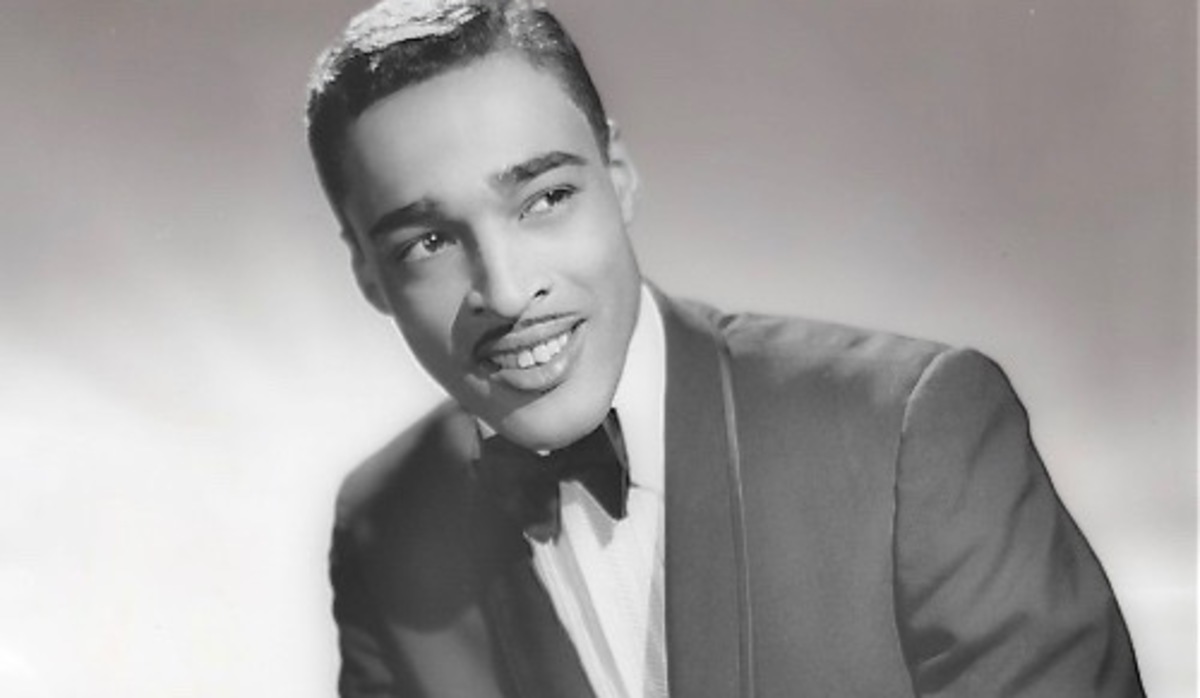
Tommy Hunt
Thomas James Hunt (June 18, 1933 – February 12, 2025) was an American soul and northern soul singer, and a 2001 Rock and Roll Hall of Fame Inductee as a member of the famed R&B group the Flamingos.
Early life
Born to Georgianna Derico on June 18, 1933, Hunt started his life in Pittsburgh, Pennsylvania, where his school friends nicknamed him Tommy, a name that stayed with him throughout his entire life. Although music dominated his formative years, as he spent those years practising for and entering multiple talent shows, he ended up being sent to reform school while still an elementary school student. Released from that school when he was ten, he and his mother subsequently relocated to Chicago.
The Flamingos
After a stint in the United States Air Force, Hunt went AWOL in order to be with his mother, who was dying. He served time in prison for deserting and, after his release, returned to Chicago where he formed a group called the Five Echoes. While performing in a nightclub, he was approached by Zeke Carey of the Flamingos, and was asked to take Carey's place, as Carey had recently been drafted. Hunt was kept on after Carey returned.
In 1959, the group's biggest hit record was "I Only Have Eyes for You".
Solo career
Hunt left the group in 1961 due to musical differences, but within three days, he was approached by Luther Dixon and released "Parade of Broken Hearts" which was slow to be picked up by the radio stations. In New York, a disc jockey called Jocko Henderson introduced the song but played the B-side by mistake. The track aired was "Human", Hunt's biggest hit in the U.S. His 1962 B-side, "I Just Don't Know What to Do with Myself", written by Burt Bacharach and Hal David, and produced by Leiber and Stoller, was the first recording of the song, which later became a major hit for Dusty Springfield, Dionne Warwick and others.
Hunt became a regular performer at The Apollo in New York alongside such artists as Jackie Wilson, Marvin Gaye, Ray Charles, Diana Ross and the Supremes, the Shirelles, Dionne Warwick, Chuck Berry, Bo Diddley, and Sam and Dave. By 1969, he travelled back to Germany, through Belgium and across the English Channel to the United Kingdom.
Northern soul
After several performances in the theatre clubs throughout the UK, Hunt sang at the second anniversary of the Wigan Casino, and there followed success on the northern soul scene. Hunt was approached by Russ Winstanley and Mike Walker of the Casino, and released several hits on Spark Records. The first was a cover version of a song formerly sung by Roy Hamilton, titled "Crackin' Up". It peaked at No. 39 in the UK Singles Chart in October 1975. This was followed by another chart success, "Loving on the Losing Side" (UK No. 28, 1976). 1982/83 saw Hunt win the Male Vocalist of the Year, presented by Club Mirror. His track, "One Fine Morning", reached No. 44 in the UK chart in December 1976.
Later years
With the decline of the northern soul, Hunt's shows dwindled, and he hit the cabaret circuit further afield, moving to Amsterdam in 1986 and travelling the world. In 1996, the first of his recognitions came in the form of the Rhythm and Blues Foundation Lifetime Achievement Award for the Flamingos' contribution to music. In 1997, Hunt relocated to the UK and embarked on a revived northern soul scene.
In later years, having turned his hand to songwriting, Hunt penned his autobiography, Only Human, My Soulful Life, with author Jan Warburton, which was released in December 2008.
Hunt started a new live show as Tommy Hunt & the New Flamingos, with members of the Spanish vocal group Velvet Candles. This show was presented on June 3, 2011, during the Screamin' Summer Festival in Barcelona, Spain. At the same time, Tommy also joined John Valero and The Black Beltones, and later The Twisted Wheels, which was his backing band in some shows around Spain. Tommy wrote all lyrics of their first álbum reléased in 2024.
Hunt died on February 12, 2025, at the age of 91.
Awards
The award for the Flamingos from the Vocal Group Hall of Fame came in 2000, followed by the Doo-Wop Hall of Fame in 2001. The Flamingos were inducted into the Rock and Roll Hall of Fame for their thirty-year contribution to music.
https://en.wikipedia.org/wiki/Tommy_Hunt