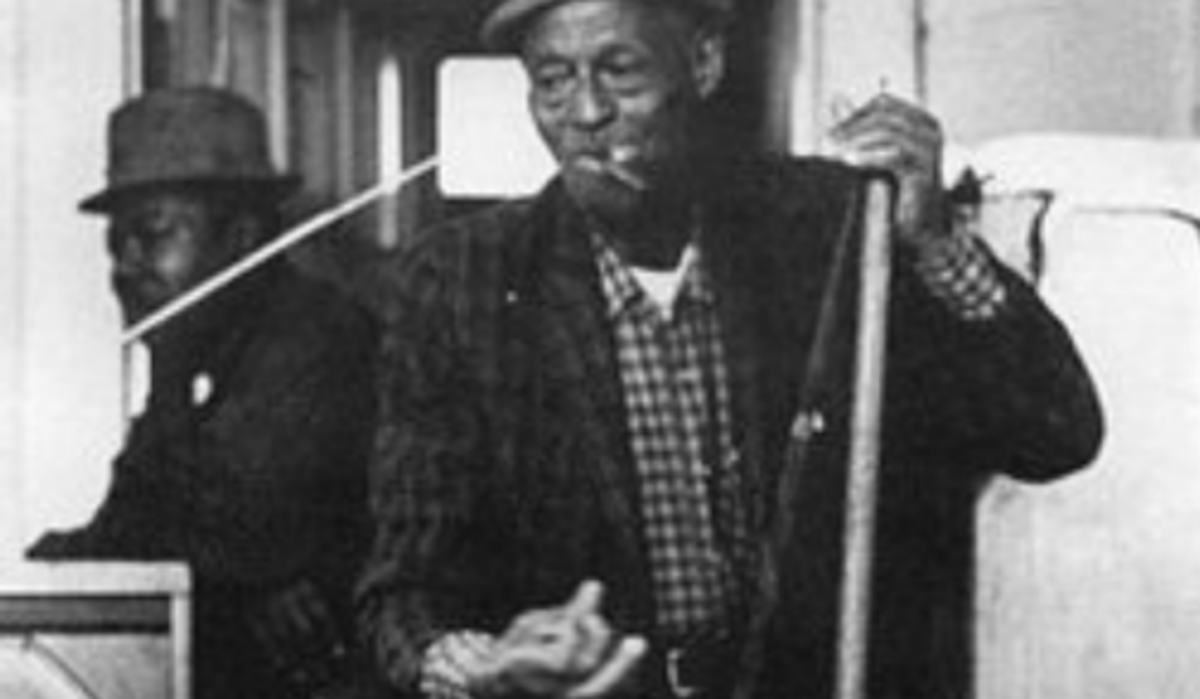
Dewey Corley
Dewey Corley (18 June 1898 – 15 April 1974; Halley, Arkansas) was an American blues vocalist and multi-instrumentalist, specialising in washtub bass, jugs, and the kazoo.
He became a fundamental fixture of the Memphis jug band tradition, known for his versatile instrumentation and distinctive vocal delivery. Over several decades, Corley anchored the local roots music scene, transitioning from a street and club performer into a foundational figure who helped preserve the early acoustic blues traditions of the region through later field recordings and direct industry involvement.
Early Life
Born in rural Halley, Arkansas, Corley spent his earliest years immersed in the developing vernacular music of the Mississippi Delta region before relocating to Tennessee. He spent nearly all of his life in Memphis, where he developed his skills on a variety of non-standard and handmade acoustic instruments that defined the pre-war blues style. Immersed in the musical culture centered around Beale Street, he mastered the complex rhythmic techniques required for the washtub bass and jug, while refining an expressive singing style that reflected the community foundations of early Southern blues.
Career
Corley’s professional career was inextricably linked to the evolution of the Memphis jug band sound, performing extensively with local ensembles in parks, streets, and clubs. He cemented his position in the genre by founding the Beale Street Jug Band, an ensemble dedicated to keeping the traditional acoustic format alive during changes in commercial music tastes. His deep knowledge of local musicians and repertoire later led him to work as a talent scout for Adelphi Records, a label focused on documenting authentic American roots music. Through this role and his own recorded output, he ensured that the unique styles of his contemporaries were captured for broader distribution.
Personal Life
Corley remained deeply rooted in his adopted home of Memphis throughout his life, dedicating his time to his music and the preservation of his community's artistic heritage. As an elder statesman of the Beale Street music community, his enduring legacy lies in his role as a bridge between the original 1920s jug band boom and the folk blues revival of the late 1960s and 1970s. He passed away in Memphis on 15 April 1974, leaving behind a body of work that remains essential to the study of early American roots music.
https://www.discogs.com/artist/1367494-Dewey-Corley