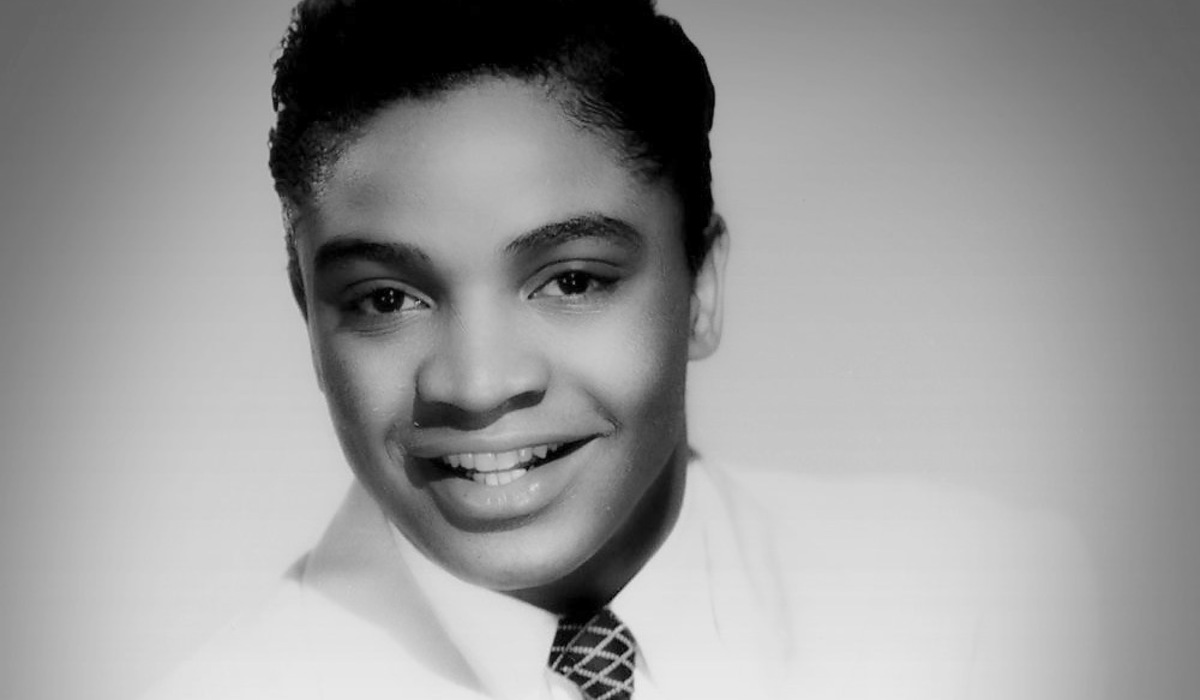
Jackie Wilson
Jack Leroy Wilson Jr. (June 9, 1934 – January 21, 1984) was an American singer who was a prominent figure in the transition of rhythm and blues into soul. Nicknamed "Mr. Excitement", he was considered a master showman and one of the most dynamic singers and performers in soul, R&B, and rock and roll history.
Born in the Detroit enclave of Highland Park, Michigan, Wilson initially gained fame as a member of the R&B vocal group Billy Ward and His Dominoes. He went solo in 1957 and scored over 50 chart singles spanning the genres of R&B, rock 'n' roll, soul, doo-wop and easy listening. This included 16 Top 10 R&B hits, six of which ranked as number ones. On the Billboard Hot 100, Wilson scored 14 top 20 pop hits, six of which reached the top 10. In 1975, Wilson suffered a heart attack during a performance, which left him in a minimally conscious state until his death in 1984.
Wilson was inducted posthumously into the Rock and Roll Hall of Fame in 1987. He is also inducted into the National Rhythm & Blues Hall of Fame. Two of Wilson's recordings were inducted into the Grammy Hall of Fame in 1999. He was honoured with the Legacy Tribute Award from the Rhythm and Blues Foundation in 2003. In 2004, Rolling Stone ranked Wilson No. 69 on its list of the 100 Greatest Artists of All Time, and placed him on their list of the 200 Greatest Singers of All Time (2023). NPR named Wilson one of the 50 Great Voices.
Life and career
Early years
Jack Leroy Wilson Jr. was born on June 9, 1934, in Highland Park, Michigan, the third and only surviving child of Eliza Mae Wilson (1900–1975) and singer Jack Leroy Wilson Sr. (1903–1983). Eliza Mae was born on the Billups-Whitfield Place in Lowndes County, Mississippi to Virginia and Tom Ransom. Wilson often visited his family in Columbus and was greatly influenced by the choir at Billups Chapel. Growing up in the suburban Detroit enclave of Highland Park, Wilson joined a gang called the Shakers and often got himself into trouble. Jack Leroy was frequently absent and usually unemployed, and in 1943, the Wilsons separated shortly after Jackie's ninth birthday.
Wilson began singing as a youth, accompanying his mother, an experienced church-choir singer. In his early teens, Wilson joined the Ever Ready Gospel Singers, who gained popularity in local churches. Wilson was not very religious, but he enjoyed singing in public. The money the quartet earned from performing was often spent on alcohol, and Wilson began drinking at an early age.
Wilson dropped out of high school at age 15, having been sentenced twice to detention in the Lansing Corrections system for juveniles. During his second stint in detention, Wilson learned to box and began competing in the Detroit amateur circuit at age 16. His record in the Golden Gloves was 2–8. After his mother forced him to quit boxing, Wilson got his girlfriend, Freda Hood, pregnant, and her father forced him to marry her. Wilson became a father at age 17.
Early career
Wilson began working at Lee's Sensation Club as a solo singer, then formed a group called the Falcons (not to be confused with the Detroit-based group that recorded the 1959 hit, "You're So Fine") that included cousin Levi Stubbs, who later led the Four Tops. (Two more of Wilson's cousins, Hubert Johnson and Levi's brother Joe, later became members of the Contours.) The other Falcons joined Hank Ballard as part of the Midnighters, including Alonzo Tucker and Billy Davis, who worked with Wilson several years later as a solo artist. Tucker and Wilson collaborated as songwriters on a few songs Wilson recorded, including his 1963 hit "Baby Workout".
Wilson was discovered by talent agent Johnny Otis, who recruited him for a group called the Thrillers. That group evolved into the Royals (who later became R&B group, the Midnighters, though Wilson was not part of the group when it changed its name and signed with King Records). Wilson signed on with manager Al Green (not to be confused with R&B singer Al Green or Albert "Al" Green of the now-defunct National Records). Green, who also managed LaVern Baker, Little Willie John, Johnnie Ray and Della Reese, owned two music publishing companies, Pearl Music and Merrimac Music, and Detroit's Flame Show Bar, where Wilson met Baker.
After Wilson recorded his first version of "Danny Boy" and a few other tracks on Dizzy Gillespie's record label Dee Gee Records under his nickname, Sonny Wilson, he was eventually hired by Billy Ward in 1953 to join a group Ward formed in 1950 called the Dominoes after Wilson's successful audition to replace the immensely popular Clyde McPhatter, who left the Dominoes and formed the Drifters. Wilson almost blew his chance that day, showing up calling himself "The shit" Wilson and bragging about being a better singer than McPhatter.
Billy Ward felt a stage name would better fit the Dominoes' image, hence Jackie Wilson. Before leaving the Dominoes, McPhatter coached Wilson on the sound Billy Ward wanted for his group, influencing Wilson's singing style and stage presence. Wilson said, "I learned a lot from Clyde, that high-pitched choke he used and other things ... Clyde McPhatter was my man. Clyde and Billy Ward." 1940s blues singer Roy Brown was also a major influence on him, and Wilson grew up listening to the Mills Brothers, the Ink Spots, Louis Jordan, and Al Jolson.
Wilson was the group's lead singer for three years, but the Dominoes lost some of their stride with the departure of McPhatter. They made appearances riding on the strength of the group's earlier hits, until 1956 when the Dominoes recorded Wilson with an interpretation of the pop hit "St. Therese of the Roses", giving the Dominoes another brief moment in the spotlight. (Their only other post-McPhatter/Wilson successes were "Stardust", released July 15, 1957, and "Deep Purple", released October 7, 1957.) In 1957, Wilson began a solo career, left the Dominoes, collaborated with his cousin Levi, and secured performances at Detroit's Flame Show Bar. Later, Al Green secured a deal with Decca Records, and Wilson was signed to its subsidiary label Brunswick.
Solo stardom
Shortly before Wilson signed a solo contract with Brunswick, Al Green died suddenly and unexpectedly. Green's business partner, Nat Tarnopol, took over as Wilson's manager (and ultimately rose to president of Brunswick). Wilson's first single was released, "Reet Petite" (from his first album, He's So Fine), which became a modest R&B success (many years later, an international smash hit). "Reet Petite" was co-written by future Motown Records founder Berry Gordy Jr. (another former boxer who was a native son of Detroit), with partner Roquel "Billy" Davis (using the pseudonym Tyran Carlo) and Gordy's sister Gwendolyn. The trio composed and produced six additional singles for Wilson: "To Be Loved", "I'm Wanderin'", "We Have Love", "That's Why (I Love You So)", "I'll Be Satisfied", and Wilson's late-1958 signature song, "Lonely Teardrops", which peaked at No. 7 on the pop charts, ranked No. 1 on the R&B charts in the U.S., and established Wilson as an R&B superstar known for his extraordinary, operatic multi-octave vocal range. Wilson's "Lonely Teardrops" sold over one million copies and was awarded a gold disc by the RIAA.
Wilson's fervour when performing, his dynamic dance moves, impassioned singing, and fashion sense earned him the nickname "Mr. Excitement", a moniker that remained throughout his career. His stagecraft in his live shows inspired James Brown, Teddy Pendergrass, Michael Jackson, and Elvis Presley, as well as a host of other artists that followed. Presley was so impressed with Wilson that he set out to meet him, and they instantly became good friends. In a photo of the two posing together, Presley's caption in the autograph reads: "You got you a friend for life". Wilson was sometimes called "The Black Elvis". Reportedly, when asked about this, Presley said, "I guess that makes me the white Jackie Wilson." Wilson also said he was influenced by Presley, saying, "A lot of people have accused Elvis of stealing the black man's music, when in fact, almost every black solo entertainer copied his stage mannerisms from Elvis."
Wilson's powerful, electrifying live performances rarely failed to bring audiences to a state of frenzy. His live performances consisted of knee drops, splits, spins, back-flips, one-footed across-the-floor slides, removing his tie and jacket and throwing them off the stage, basic boxing steps like advance and retreat shuffling, and one of his favourite routines, getting some of the less attractive women in the audience to come up to the stage and kiss him. Wilson often said, "If I get the ugliest girl in the audience to come up and kiss me, they'll all think they can have me and keep coming back and buying my records."
Wilson was a regular on TV, making regular appearances on such shows as The Ed Sullivan Show, American Bandstand, Shindig!, Shivaree and Hullabaloo. His only movie appearance was in the rock and roll film Go, Johnny, Go!, where Wilson performed his 1959 hit song "You Better Know It".
In 1958, Davis and Gordy left Wilson and Brunswick after royalty disputes escalated between them and Nat Tarnopol. Davis soon became a successful staff songwriter and producer for Chess Records, while Gordy borrowed $800 from his family and used money that he earned from royalties writing for Wilson to start his own recording studio, Hitsville USA, the foundation of Motown Records in his native Detroit. Meanwhile, convinced that Wilson could venture out of R&B and rock and roll, Tarnopol had the singer record operatic ballads and easy-listening material, pairing him with Decca Records' veteran arranger Dick Jacobs.
Wilson scored hits as he entered the 1960s with the No. 15 "Doggin' Around", the No. 4 pop ballad "Night", another million-seller, and "Baby Workout", another Top 10 hit (No. 5), which he composed with the Midnighters member Alonzo Tucker. Wilson's songwriting alliance with Tucker also turned out other songs, including "No Pity (In The Naked City)" and "I'm So Lonely." Top 10 hits continued with "Alone at Last" (No. 8 in 1960) and "My Empty Arms" (No. 9 in 1961).
In 1961, Wilson recorded a tribute album to Al Jolson, Nowstalgia ... You Ain't Heard Nothin' Yet, which included the only album liner notes he ever wrote: "... to the greatest entertainer of this or any other era ... I guess I have just about every recording he's ever made, and I rarely missed listening to him on the radio ... During the three years I've been making records, I've had the ambition to do an album of songs, which, to me, represent the great Jolson heritage ... This is simply my humble tribute to the one man I admire most in this business ... to keep the heritage of Jolson alive." The album was a commercial failure.
Following the success of "Baby Workout", Wilson experienced a lull in his career from 1964 to 1966 as Tarnopol and Brunswick Records released a succession of unsuccessful albums and singles. Despite the lack of sales success, Wilson still made artistic gains as he recorded an album with Count Basie, as well as a series of duets with R&B artist LaVern Baker and gospel singer Linda Hopkins.
In 1966, Wilson scored the first of two big comeback singles with the established Chicago soul producer Carl Davis with "Whispers (Gettin' Louder)" and "(Your Love Keeps Lifting Me) Higher and Higher", the latter a No. 6 pop hit in 1967 that became one of his final hits. "I Get the Sweetest Feeling", despite its modest initial chart success in the U.S. (Billboard Pop No. 34), has since become one of his biggest international chart successes, ranking in the Top 10 twice in the UK (in 1972 and 1987) and in the Top 20 of the Dutch Top 40. "I Get the Sweetest Feeling" spawned numerous cover versions by other artists such as Edwin Starr, Will Young, Erma Franklin (Aretha Franklin's sister) and Liz McClarnon.
A key to Wilson's musical rebirth was Davis insisting that he no longer record with Brunswick's musicians in New York; instead, Wilson recorded with Detroit musicians normally employed by Motown Records and also Davis's own Chicago-based session players. The Detroit musicians, known as the Funk Brothers, participated in Wilson's recordings due to their respect for Davis and Wilson.
By 1975, Wilson and the Chi-Lites were the only significant artists left on Brunswick's roster. Wilson had continued to record singles that found success on the R&B chart, but found no significant pop-chart success. His final hit, "You Got Me Walkin'", written by Eugene Record of the Chi-Lites, was released in 1972 with the Chi-Lites backing him on vocals and instruments.
Illness and death
On September 29, 1975, Wilson was one of the featured acts in Dick Clark's Good Ol' Rock and Roll Revue, hosted by the Latin Casino in Cherry Hill, New Jersey. He was in the middle of singing "Lonely Teardrops" when he suffered a massive heart attack. On the words "My heart is crying", Wilson collapsed on stage; audience members applauded as they initially thought it was part of the act. However, Clark sensed that something was wrong and ordered the musicians to stop the music. Cornell Gunter of the Coasters, who was backstage, noticed that Wilson was not breathing. Gunter was able to resuscitate him, and Wilson was then rushed to a nearby hospital. According to Larry Geller, Wilson wanted to sweat profusely during his performances, explaining to Elvis Presley, "The chicks love it." To induce the effect, Wilson would take a handful of salt tablets and drink a large amount of water before going onstage. High salt consumption is known to be a risk factor for heart disease. Among the other witnesses to the first meeting with Elvis, nobody ever confirmed that this story was serious and that it was not a joke made by a man who had lost a kidney, so taking salt tablets would be unlikely.
Medical personnel worked to stabilise Wilson's vital signs, but the lack of oxygen to his brain caused Wilson to slip into a coma. He briefly recovered in early 1976 and was even able to take a few wobbly steps, but Wilson eventually slipped back into a semi-comatose state.
Wilson's friend, fellow singer Bobby Womack, planned a benefit at the Hollywood Palladium to raise funds for Wilson on March 4, 1976. Wilson was deemed conscious but incapacitated in early June 1976, aware of his surroundings but unable to speak. Wilson was a resident of the Medford Leas Retirement Center in Medford, New Jersey, when he was admitted into Memorial Hospital of Burlington County in Mount Holly, New Jersey, due to having trouble taking nourishment, according to his attorney, John Mulkerin. Elvis Presley covered a large portion of Wilson's medical bills. Wilson's friend, Joyce McRae, tried to become his caregiver while he was in the nursing home, but Wilson was placed in the guardianship of his estranged wife, Harlean Harris and her lawyer, John Mulkerin, in 1978.
Wilson died on January 21, 1984, at age 49 from complications of pneumonia. His funeral was held at Russell Street Baptist Church. Wilson was initially buried in an unmarked grave at Westlawn Cemetery near Detroit.
In 1987, fans raised money in a fundraiser spearheaded by an Orlando disc jockey, "Jack the Rapper" Gibson, to purchase a mausoleum. A ceremony was held on June 9, 1987, his 53rd birthday, and Wilson was interred in the mausoleum at Westlawn Cemetery in Wayne, Michigan. His mother, Eliza Wilson, who died in 1975, was also placed in the mausoleum.
Personal life
Wilson converted to Judaism as an adult. He recorded a version of Lew Pollack and Jack Yellen's famed Jewish-themed song "My Yiddishe Momme" in New York in November 1960.
Wilson had a reputation for being short-tempered and promiscuous. In her autobiography, Patti LaBelle accused Wilson of sexually assaulting her backstage at Brooklyn's Brevoort Theatre in the 1960s.
On February 15, 1961, in Manhattan, Wilson was shot and seriously wounded by Juanita Jones, one of his girlfriends, who shot Wilson in a jealous rage when he returned to his Manhattan apartment with another woman, fashion model Harlean Harris, an ex-girlfriend of Sam Cooke (and later Wilson's second wife). Wilson's management supposedly concocted the story about her being a zealous fan in order to protect Wilson's reputation. They claimed that Jones, obsessed with Wilson, had threatened to shoot herself and that the singer's intervention resulted in him being shot. Wilson was shot in the stomach; the wound resulted in the loss of a kidney, and the bullet lodged too close to his spine to be removed.
In early 1975, during an interview with author Arnold Shaw, Wilson maintained that he was actually shot by a zealous fan whom he did not know. Wilson stated, "We also had some trouble in 1961. That was when some crazy chick took a shot at me and nearly put me away for good..." No charges were brought against Jones.
https://en.wikipedia.org/wiki/Jackie_Wilson