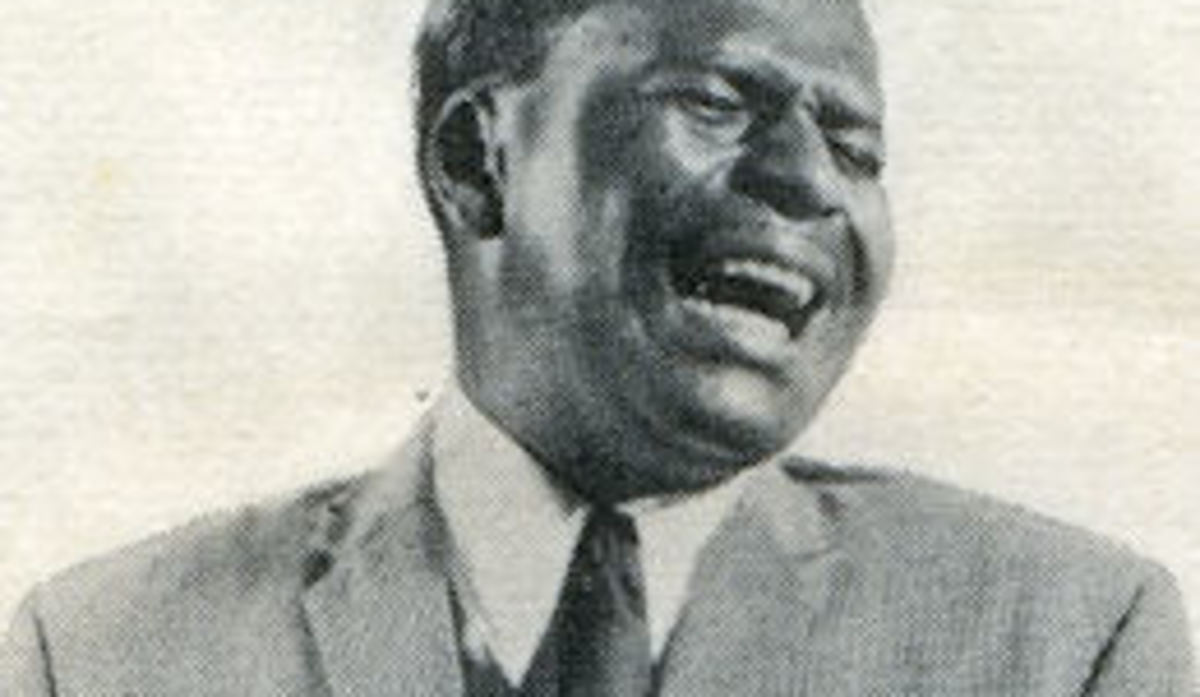
Billy Young
William D. Young (born 25 May 1941; died 19 August 1999) was born in Daingerfield, Texas. Better known by his prominent stage name Billy Young, he was an American singer-songwriter whose musical specialisation spanned across soul music and rhythm and blues. He recorded music actively between 1963 and 1984. Young achieved commercial recognition in the 1960s after being discovered, produced, and promoted by the soul artist Otis Redding. His career is largely defined by his primary hit single, "The Sloopy", which remains his most notable musical success.
Early Life
Young spent his early childhood in Daingerfield, Texas, before his family relocated to the West Coast of the United States. Raised in an environment that fostered his interest in music, he developed a distinctive vocal technique early in life. This initial foundation allowed him to perform in a high register with a developed use of falsetto phrases. He pursued his formal and informal musical education through local community groups and early performance ensembles. His early musical foundations were solidified during his adolescence, laying the groundwork for his entry into the professional recording industry during the early 1960s.
Career
The professional journey of Young began with his early recordings, which are attributed to the Crest recording label, where he performed as a member of the vocal group the Classics. He initiated his solo recording career in 1963, releasing his first 45 RPM records under his own name for the Original Sound label. Following a relocation to Macon, Georgia, Young established a significant professional relationship with Otis Redding, who assumed the role of his producer and mentor. Under Redding's direct supervision, Young recorded the single "Same Thing All Over" at FAME Studios. In 1965, he achieved his most significant commercial milestone with the release of "The Sloopy", a track written by Redding and distributed internationally. Young continued to expand his discography with self-penned material, including the 1967 single "Nothing's Too Much (Nothing's Too Good)". He continued to record over the subsequent decades, which included the release of the single "Burning Up" in 1974, before concluding his active recording era in 1984.
Personal Life
Young maintained a private family life following his transition from Texas to the West Coast and the American South. Beyond his studio obligations, he engaged in community work within the regional music scenes of Georgia and California, assisting local musicians in navigating the regional theatre and performance circuits. His professional legacy is defined by his contribution to the 1960s Southern soul movement and his technical role as one of the few artists directly produced by Otis Redding. His work has been catalogued by deep soul preservationists and remains an archive of the classic rhythm and blues era. Young died on 19 August 1999 at the age of 58.
https://en.wikipedia.org/wiki/Billy_Young_(singer)